Do inversion tables really work?
Last updated 2026-11-01 · Written by Inversion Guide editorial team
Disclosure: if you buy through our links, we may earn a commission at no extra cost to you. As an Amazon Associate I earn from qualifying purchases.
For information only. This page is general product information, not medical advice. Talk to your doctor or physiotherapist before using an inversion table.
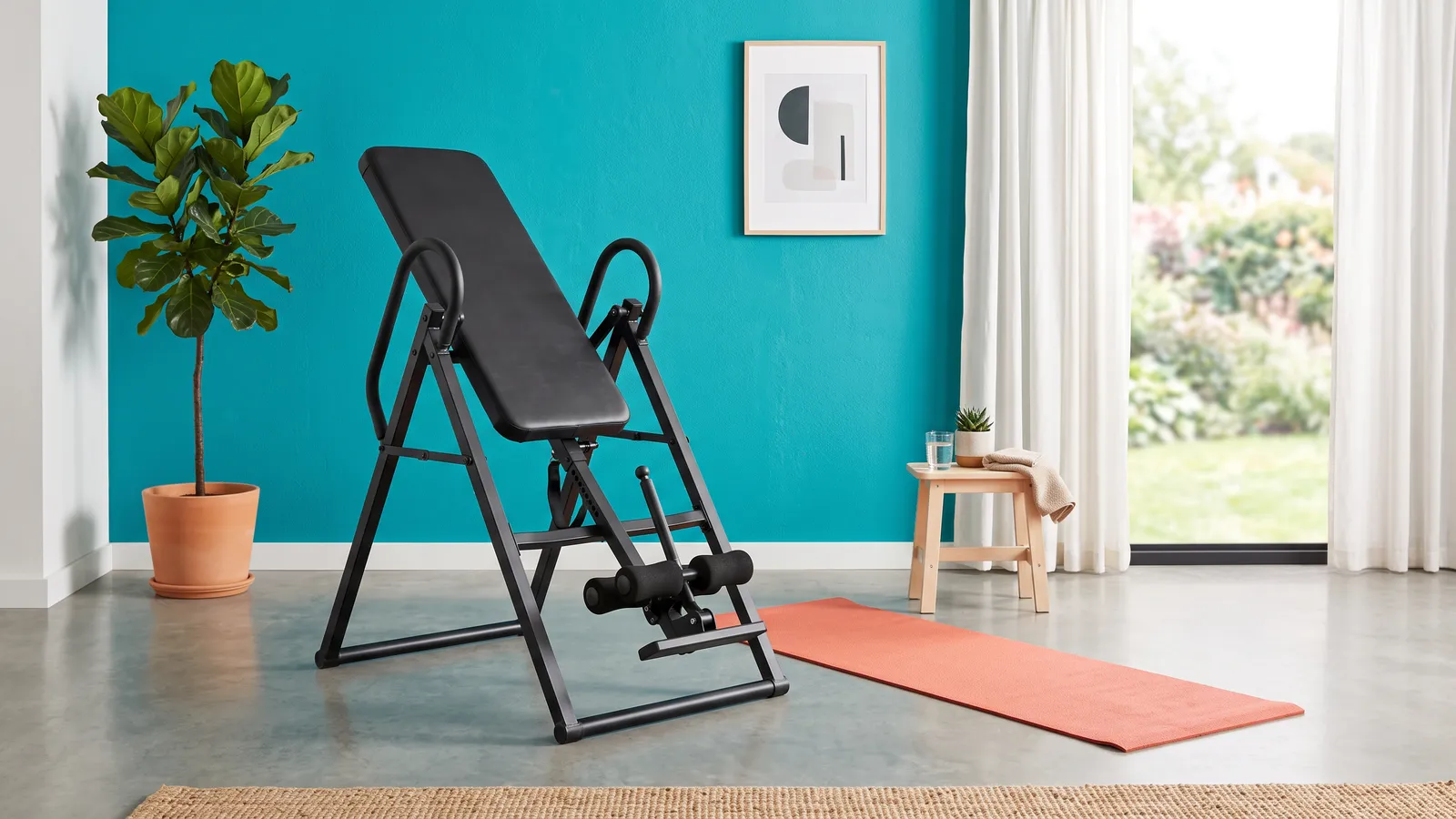
Inversion tables are not for everyone. Read who should not use one first.
We research; we have not tested any table. Everything below comes from the sources listed at the bottom.
What "work" can honestly mean
There are three different questions hiding in "do they work".
- Does it feel like a stretch? Often yes, which is why many people keep using one. Cleveland Clinic describes the theory as gravity briefly easing off the spine while you hang.
- Does it relieve pain for good? There is little evidence it does. Healthline says "there's little evidence that inversion therapy provides long-term relief."
- Is it better than other treatments? Not shown. Medical News Today reports the 2017 American College of Physicians guidance: traction methods "do not appear harmful in otherwise healthy people," but there is little good-quality evidence they beat other techniques.
What the research says
- Cleveland Clinic: "The research is mixed." It says most studies were small and that better-designed studies are needed. Its specialist says he "wouldn't recommend inversion therapy by itself for treating back pain."
- Healthline: studies are inconclusive. One study of 47 people with chronic low back pain used three 3-minute sets at different angles, and the group at 60 degrees reported less back pain after eight weeks.
- Medical News Today: some evidence supports short-term management of back pain, but "evidence of its effectiveness is mixed." A 2012 study looked at 26 people, so more research is needed.
- WebMD: the evidence is mixed, and some studies suggest it works no better than sham treatment.
Notice the pattern. Small studies, short follow-up, and a few positive results that the same sources say are not conclusive. If a table helps you, the most likely version is a short-term stretch that you pair with other things.
What to expect if you try one
- Short sessions at a gentle angle. Cleveland Clinic suggests starting with 30 to 45 seconds tilted back and building only if you have no dizziness or added pain. Healthline says to build slowly from one-minute sets to three. See how long to use one and what angle to pick.
- Weeks, not minutes. Cleveland Clinic says any longer-term effects may take up to eight weeks of daily use to show.
- Come up slowly. Standing quickly can cause dizziness or more pain.
- Combine it. Cleveland Clinic's specialist pairs it with other approaches such as physical therapy, stretching, yoga and core strengthening.
- Stop if it gets worse. Medical News Today says to stop if side effects appear or symptoms worsen.
When it is the wrong tool
Healthline and Medical News Today list people who may be advised against inversion, including those with high blood pressure, heart disease, a stroke history, glaucoma or retinal detachment, osteoporosis, fractures, a hernia, pregnancy, and people taking blood thinners or blood pressure medicine. Cleveland Clinic adds a warning that inversion can raise pressure in the skull. If you are not sure, see our safety page.
A table is also not the only way to try traction. Compare options in inversion table vs traction, and read the benefits page for the wider evidence.
What we'd buy if your doctor says yes
You are buying a tool for gentle, adjustable stretching, so look for easy angle control, a secure ankle lock and a weight and height range that fits you. From our research set:
- Teeter FitSpine X3 / inversion table: the premium pick, with the maker's longer warranty and angle controls.
- Innova ITX9600: a budget-to-mid option that folds, for a first table.
- Teeter Hang Ups EP-560: a mid-range Teeter for people who want the brand without the top-tier price.
The cards below show verified specs. We do not show prices here, because they change daily on Amazon. See all best inversion tables.
Common questions
Do inversion tables work for back pain? Possibly for short-term relief in some people. The evidence is mixed and the sources we read do not call it a lasting fix.
Do inversion tables work better than other treatments? Not shown. The 2017 ACP guidance, as reported by Medical News Today, says there is little good-quality evidence they beat other techniques.
How long until I notice anything? Cleveland Clinic says some people notice quick, short-term effects, and that longer-term effects, if any, could take up to eight weeks of daily use. We cannot promise what you will feel.
Do I need to go fully upside down? No. Partial angles are common. The 60-degree result in Healthline's study is the only angle that source names.
Is a mini inversion table or a cheap one just as good? We have no research on that. Weight limit, ankle lock and a controllable angle matter more than the label. See how to choose.
Gear that helps
Teeter FitSpine X3 Inversion Table
Best for: Most people who want a proven, easy-to-use table within 300 lb and 4'8" to 6'6"
- Max user 300 lb
- Height 4'8"–6'6"
- Max angle 180°
- Folds
- Mid-range
Prices change often. Check the current price on Amazon.
Innova ITX9600 Heavy Duty Deluxe Inversion Table
Best for: Budget-minded users within 300 lb who are happy with a simple pin-set angle
- Max user 300 lb
- Height 4'10"–6'6"
- Max angle TBD
- Folds
- Budget
Prices change often. Check the current price on Amazon.
Teeter EP-560 Inversion Table
Best for: First-time buyers who want a Teeter at the lowest Teeter price
- Max user 300 lb
- Height 4'8"–6'6"
- Max angle 180°
- Folds
- Budget
Prices change often. Check the current price on Amazon.
Sources
Related
- Inversion table benefits: what the evidence saysWhat people say inversion tables do, what health sources say the research shows, and who should ask a doctor first.
- How long to use an inversion tableSession lengths and frequency suggested by Teeter's manual, WebMD and Cleveland Clinic, and why you should start with seconds, not minutes.
- What angle should I invert at?What the makers and health sources say about starting angles, working up gradually, and why angle scales differ between tables.
- Inversion table vs tractionInversion is described by health sources as a form of gravity-assisted traction. How it compares with other traction, what NICE says about traction for low back pain, and what to check.
- Who should not use an inversion tableWho should talk to a doctor before trying an inversion table, when to stop, and how to start carefully. Written from health sources and the makers' own manuals.
- Best inversion tablesSeven inversion tables chosen from the makers' published specs: who each suits, weight and height limits, warranties, and who should not invert.