How long to use an inversion table
Last updated 2026-10-20 · Written by Inversion Guide editorial team
For information only. This page is general product information, not medical advice. Talk to your doctor or physiotherapist before using an inversion table.
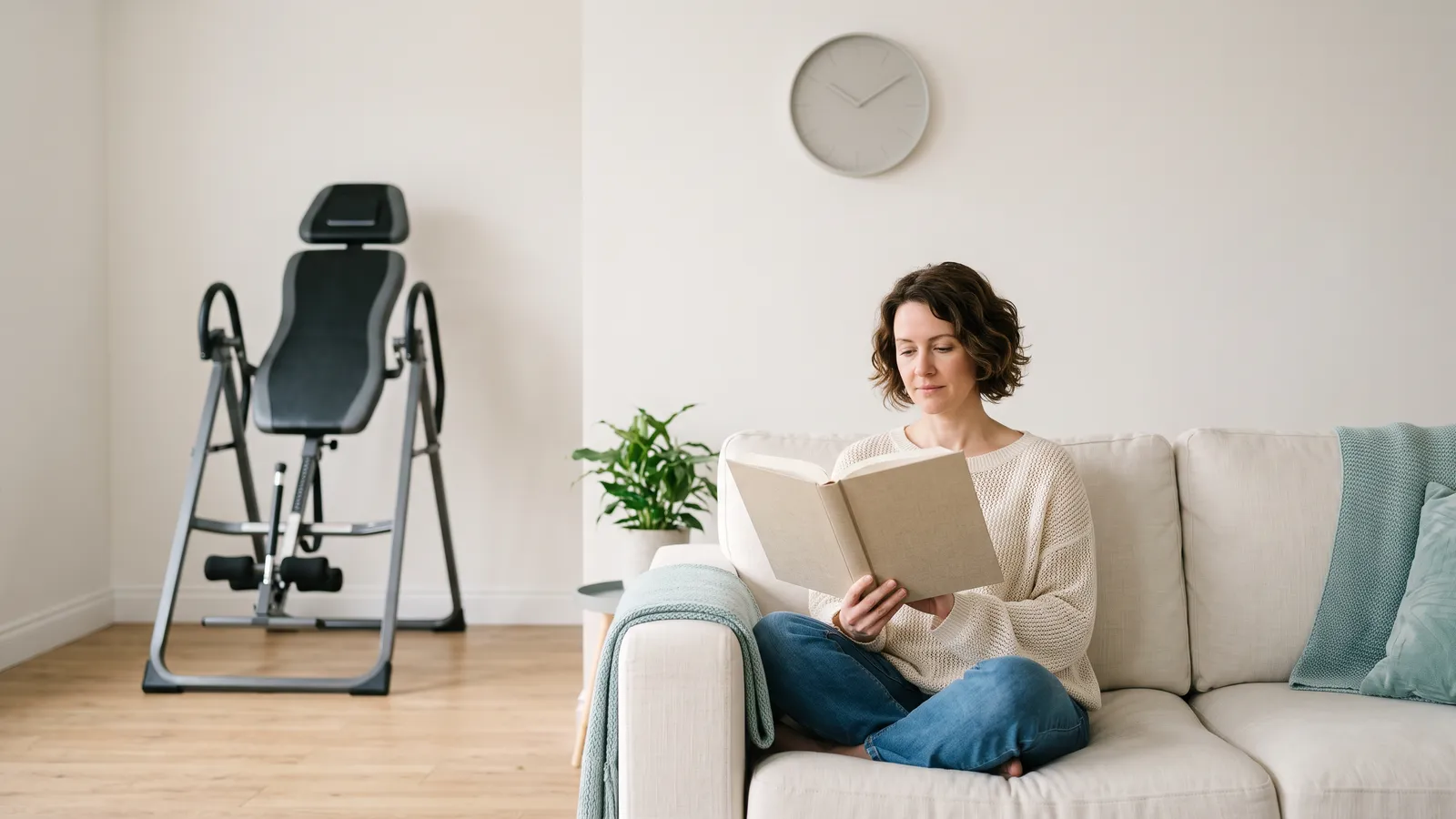
Inversion tables are not for everyone. Read who should not use one first.
What the sources suggest
| Source | First sessions | Later |
|---|---|---|
| Cleveland Clinic | 30 to 45 seconds, then longer only if you feel fine | Research cited puts "three minutes at a 60-degree tilt" as a common choice; results are mixed |
| WebMD | 1 to 2 minutes, once a day | Limit to 5 minutes, twice a day |
| Teeter manual | 1 to 2 minute sessions | "Typically about 3 to 5 minutes" |
| Healthline | One-minute sets | Building to three-minute sets |
The numbers are close but not identical, and none comes from a controlled test of what is ideal. When your table's maker gives different numbers in its manual, follow the manual.
How often?
Sources differ. WebMD suggests once a day to begin with, up to twice a day. Teeter says shorter, more frequent sessions suit most people better than long ones done rarely, and mentions inverting several times a day. Cleveland Clinic's specialist says that if any longer-term effect appears, it could take as much as eight weeks of daily use. We would not treat any of these as a prescription. A doctor or physiotherapist can tell you what is sensible for you.
Build up slowly
Teeter's manual says to work up only as you become comfortable and as your muscles can relax. Cleveland Clinic says: "If you don't feel dizzy and your pain doesn't get worse, you can work your way up to longer stretches." Teeter's manual says to react to discomfort by reducing the angle or the time.
Coming back up
How you come up matters as much as how long you stay down. Cleveland Clinic says blood rushes to your head when you are upside down and that coming up fast can make you dizzy. Teeter says to rest for a few minutes just past horizontal before returning fully upright, and recommends 15 to 30 seconds or more in its tips. Teeter also warns against lifting your head or sitting up; bend your knees and shift your weight instead. See how to use an inversion table.
Common questions
How long can you hang upside down?
The sources we read do not give a maximum time for full inversion. They give short session lengths and say to follow comfort and the manual. WebMD's upper figure is about 5 minutes per session.
Can I use it every day?
WebMD suggests once or twice a day, and Cleveland Clinic mentions daily use over weeks. Ask your doctor before building it into a routine.
Should I stop if something feels wrong?
Yes. Teeter's manuals say to return upright immediately if you feel pain or become light-headed or dizzy. See our safety page.
Gear that helps
A table with a clear angle limiter and a smooth, controllable rotation makes short sessions easier to manage. See best inversion tables.
Sources
Related
- What angle should I invert at?What the makers and health sources say about starting angles, working up gradually, and why angle scales differ between tables.
- How to use an inversion table safelySetup and first-session steps drawn from Teeter's owner's manuals and health sources: footwear, ankle lock, balance test, spotter, and how to come back up.
- Who should not use an inversion tableWho should talk to a doctor before trying an inversion table, when to stop, and how to start carefully. Written from health sources and the makers' own manuals.
- Best inversion tablesSeven inversion tables chosen from the makers' published specs: who each suits, weight and height limits, warranties, and who should not invert.