What angle should I invert at?
Last updated 2026-10-20 · Written by Inversion Guide editorial team
For information only. This page is general product information, not medical advice. Talk to your doctor or physiotherapist before using an inversion table.
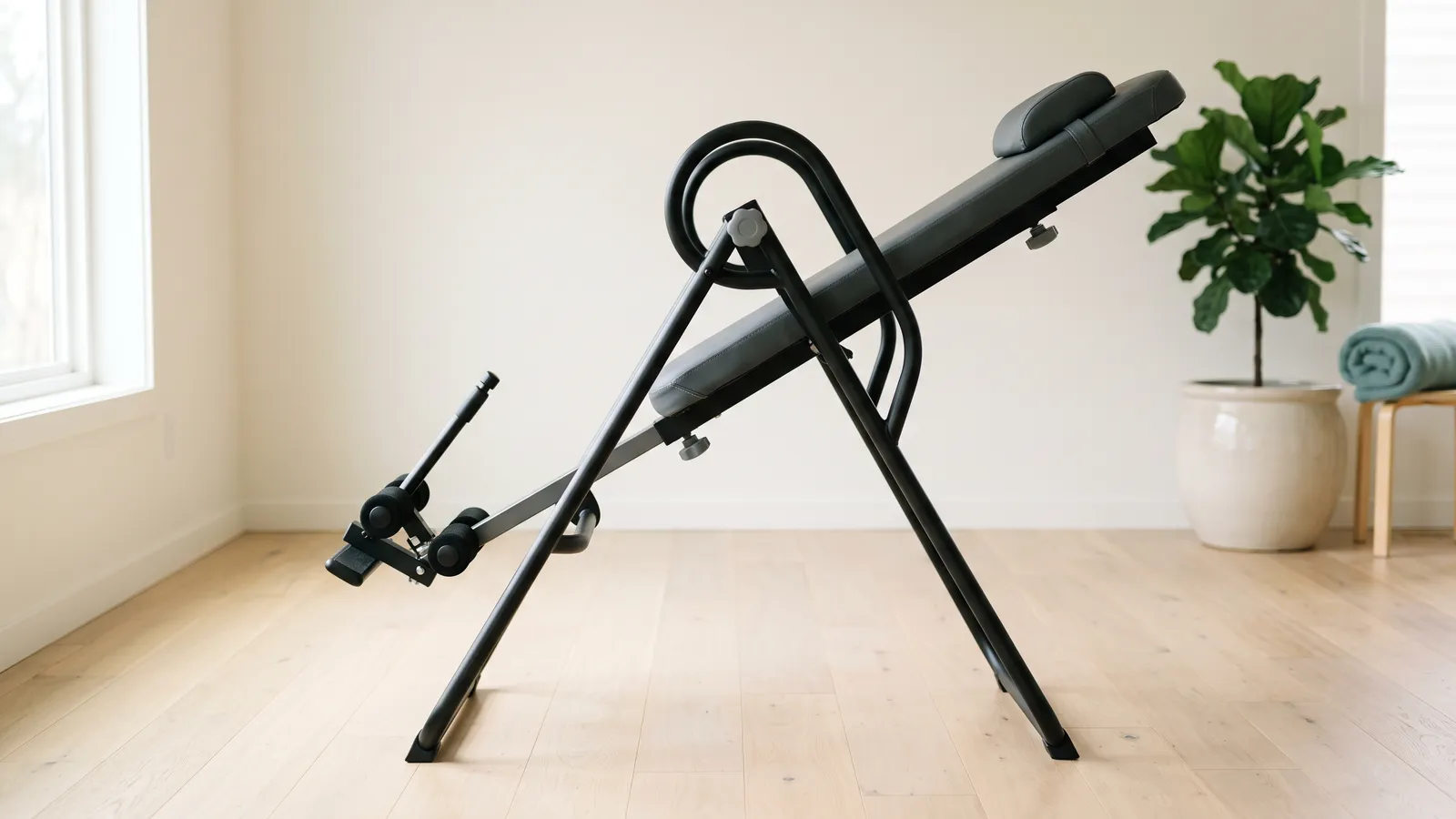
Inversion tables are not for everyone. Read who should not use one first.
Start with a small angle
Nobody we found recommends starting upside down.
- WebMD: "Don't lean back all the way. Try to just tip back at a 30-degree angle, or as little as 10 degrees if you're an older adult."
- Teeter's FitSpine manual: "Start at a modest angle (20 to 30 degrees) for the first few weeks or until you become comfortable with the sensation and operation of the equipment."
- Cleveland Clinic describes tipping "from a slight recline up to a 180-degree position, based on your comfort level", and says to follow your table's instructions.
Working up
Teeter says to advance to greater angles only once you can fully relax, to "advance slowly and listen to your body", and notes that "many users never do more than 60 degrees, and that's just fine." Cleveland Clinic and Healthline both mention 60 degrees. Healthline describes a study that used 60 degrees, and Cleveland Clinic says research suggests three minutes at a 60-degree tilt is the "sweet spot", while noting that studies find mixed results. Treat that as a reference point, not a target.
Full inversion is optional
Teeter's manuals describe full inversion as something to attempt only when you are comfortable with partial inversion, and say you should not try it until you can fully relax at 60 degrees. Tables are balanced differently, and full inversion changes how you get back upright, so read your manual first.
Angle scales are not the same on every table
This trips people up. Teeter's FitSpine manual labels full inversion as 90 degrees, with 0 degrees as horizontal. Cleveland Clinic describes a range up to 180 degrees. Some tables count from upright, some from horizontal. Before you follow any number from an article, work out how your table's scale works, using its manual and angle markings.
How to set and limit the angle
- Use the angle limiter your table provides. Teeter calls it an angle tether, and says to attach it for your first sessions to stop the table rotating too far or too quickly.
- Move your arms slowly. Teeter says the faster you move, the faster the table rotates.
- Set your height and balance adjustments first. Teeter says improper settings can cause rapid inversion or make returning upright difficult.
- Bring your body back up slowly, and rest briefly just past horizontal on a Teeter before standing, to help prevent dizziness.
Common questions
What angle is best?
There is no single best angle. The sources we read give starting points and say to go by comfort. Cleveland Clinic reports that research results are mixed.
Is 180 degrees better than 60?
We found no source that says so. Teeter says many users never go past 60 degrees.
What if I feel dizzy?
Teeter's manuals say to return to upright straight away if you feel pain or become light-headed or dizzy. Read our safety page.
Gear that helps
Look for an angle limiter or tether and clear angle markings. Compare options in best inversion tables or best folding inversion tables.
Sources
Related
- How long to use an inversion tableSession lengths and frequency suggested by Teeter's manual, WebMD and Cleveland Clinic, and why you should start with seconds, not minutes.
- How to use an inversion table safelySetup and first-session steps drawn from Teeter's owner's manuals and health sources: footwear, ankle lock, balance test, spotter, and how to come back up.
- Who should not use an inversion tableWho should talk to a doctor before trying an inversion table, when to stop, and how to start carefully. Written from health sources and the makers' own manuals.
- Best inversion tablesSeven inversion tables chosen from the makers' published specs: who each suits, weight and height limits, warranties, and who should not invert.