Inversion chair vs inversion table
Last updated 2026-10-20 · Written by Inversion Guide editorial team
For information only. This page is general product information, not medical advice. Talk to your doctor or physiotherapist before using an inversion table.
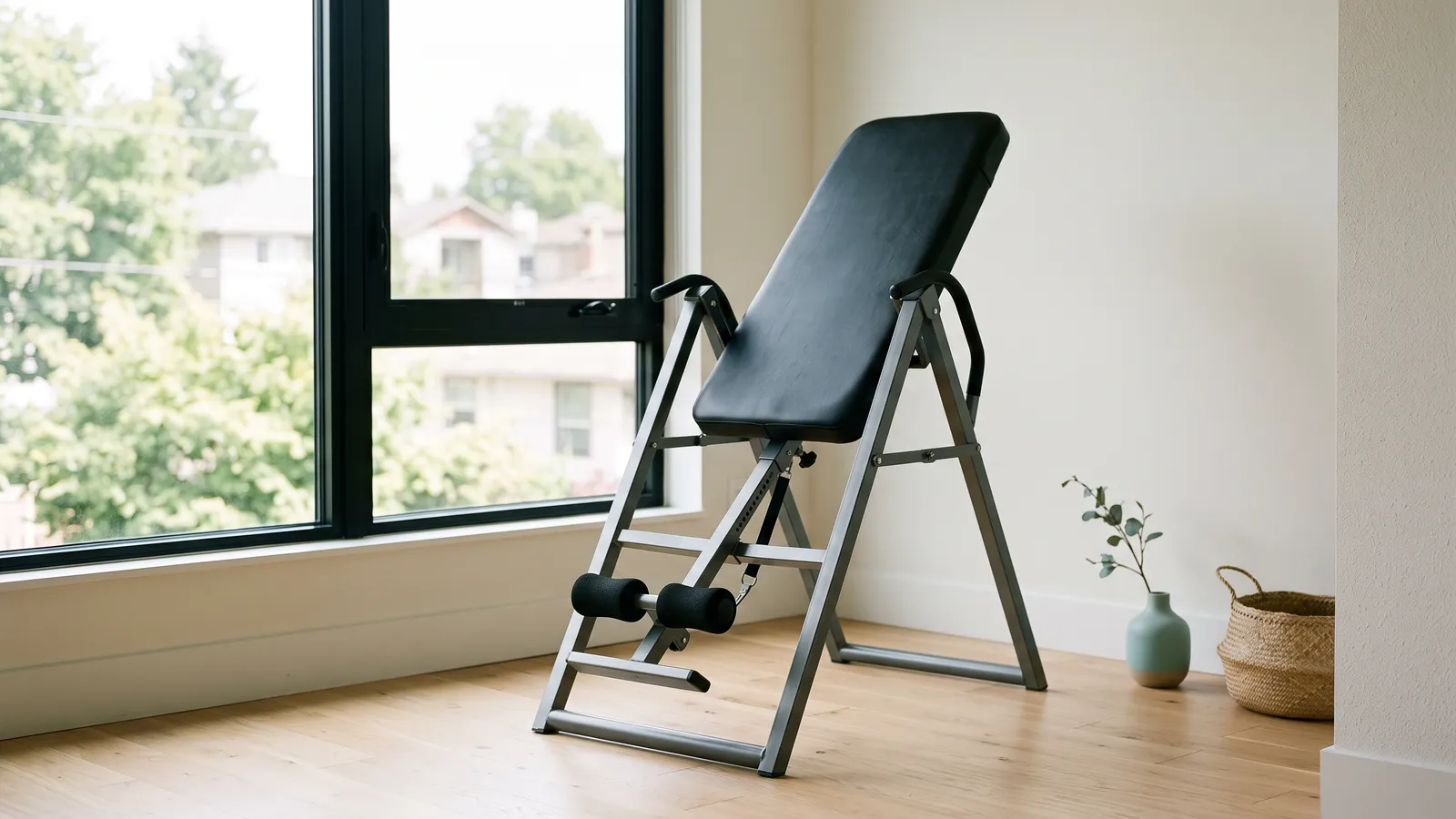
Inversion tables are not for everyone. Read who should not use one first.
What is an inversion chair?
Healthline lists inversion chairs as one of the device types used for inversion therapy, alongside tables and gravity boots. Its description is short: chairs use similar concepts as the table, and the major difference is that a person sits instead of standing or lying back. Cleveland Clinic also says inversion therapy is usually done "with the help of an inversion table or chair". Neither source gives a make, model, weight limit or angle range for a chair.
Inversion chair vs inversion table
| Inversion table | Inversion chair | |
|---|---|---|
| Position | You are strapped in at the ankles and lie back on a bed | You sit, per Healthline |
| Maker specs we could verify | Yes: weight limit, height range, warranty and ankle system on Teeter and Innova pages | None that we could find from a mainstream maker |
| Angle control | Tether or pin, set before you lean back | Not described by the sources we read |
| What the health sources say | Evidence is limited and mixed (Cleveland Clinic, WebMD, Healthline) | The same sources do not separate chairs from tables |
Do chairs really exist as a product?
We checked the places a buyer would start. Teeter's inversion catalog page and Innova's home page, two of the best-known makers, list tables and no chair, and Healthline names chairs only as a category. That does not prove no chair exists, only that we could not find one with maker-published specs, which is our minimum for a recommendation. If you see a chair for sale, treat it like any unverified product: look for a weight limit, an ankle or leg securing method, and a warranty on the maker's own site before you trust it.
Which is gentler: a chair or a table?
The sources we read do not say. WebMD and Cleveland Clinic both tell people to start with small angles and short sessions, to have someone with them, and to come back up slowly, and they say this about tables. Healthline lists conditions for which doctors may not recommend inversion exercises of any kind, and does not exempt chairs. If an advertisement tells you a chair is "gentler", ask what it is based on.
What the evidence says in general
Cleveland Clinic says there is limited quality evidence for the benefits people report, that most studies have been small, and that research results are mixed. WebMD says evidence is mixed on whether tables are an effective treatment for pain, and that injuries are fairly common and most often due to operator error. Some people find tipping back eases stiffness for a while. None of that is specific to chairs.
How to decide
- Ask a doctor or physiotherapist first. Cleveland Clinic says some physical therapists use inversion in their practice, and suggests trying it there before buying for the home.
- If you want a device with published limits, compare tables. Start with how to choose an inversion table or the picker.
- If you want to see our verified tables side by side, see best inversion tables.
- If you would rather avoid hanging back at all, the sources we read describe a gentle partial tilt as the usual starting point. See what angle to start at.
Safety
Inversion devices are not for everyone. Read who should not use an inversion table first, and talk to your doctor before you try one if you have any health condition.
Sources
Related
- How to choose an inversion tableWeight limit and height range first, then ankle system, angle control, folding and warranty: a checklist built from the makers' own published specs.
- How to use an inversion table safelySetup and first-session steps drawn from Teeter's owner's manuals and health sources: footwear, ankle lock, balance test, spotter, and how to come back up.
- Who should not use an inversion tableWho should talk to a doctor before trying an inversion table, when to stop, and how to start carefully. Written from health sources and the makers' own manuals.
- Best inversion tablesSeven inversion tables chosen from the makers' published specs: who each suits, weight and height limits, warranties, and who should not invert.