How to use an inversion table safely
Last updated 2026-10-20 · Written by Inversion Guide editorial team
For information only. This page is general product information, not medical advice. Talk to your doctor or physiotherapist before using an inversion table.
Inversion tables are not for everyone. Read who should not use one first.
Before the first session
- Read the manual and watch any maker video. Teeter's manuals say to do this before use and to inspect the equipment each time.
- Check the limits. Teeter's manuals say not to use its tables if you are over 6 ft 6 in (198 cm) or over 300 lb (136 kg). Other brands set their own limits, so check yours.
- Put the table on a level surface, away from water or ledges, and make sure there is clearance to rotate in front, above and behind you.
- Check all fasteners are secure. Do not use the table with a damaged part.
Mounting
- Wear securely tied, flat-soled lace-up shoes, such as tennis shoes. Teeter says no boots, high-tops or thick soles, because they can get in the way of the ankle clamps.
- Set the height adjustment for your height, as the manual describes.
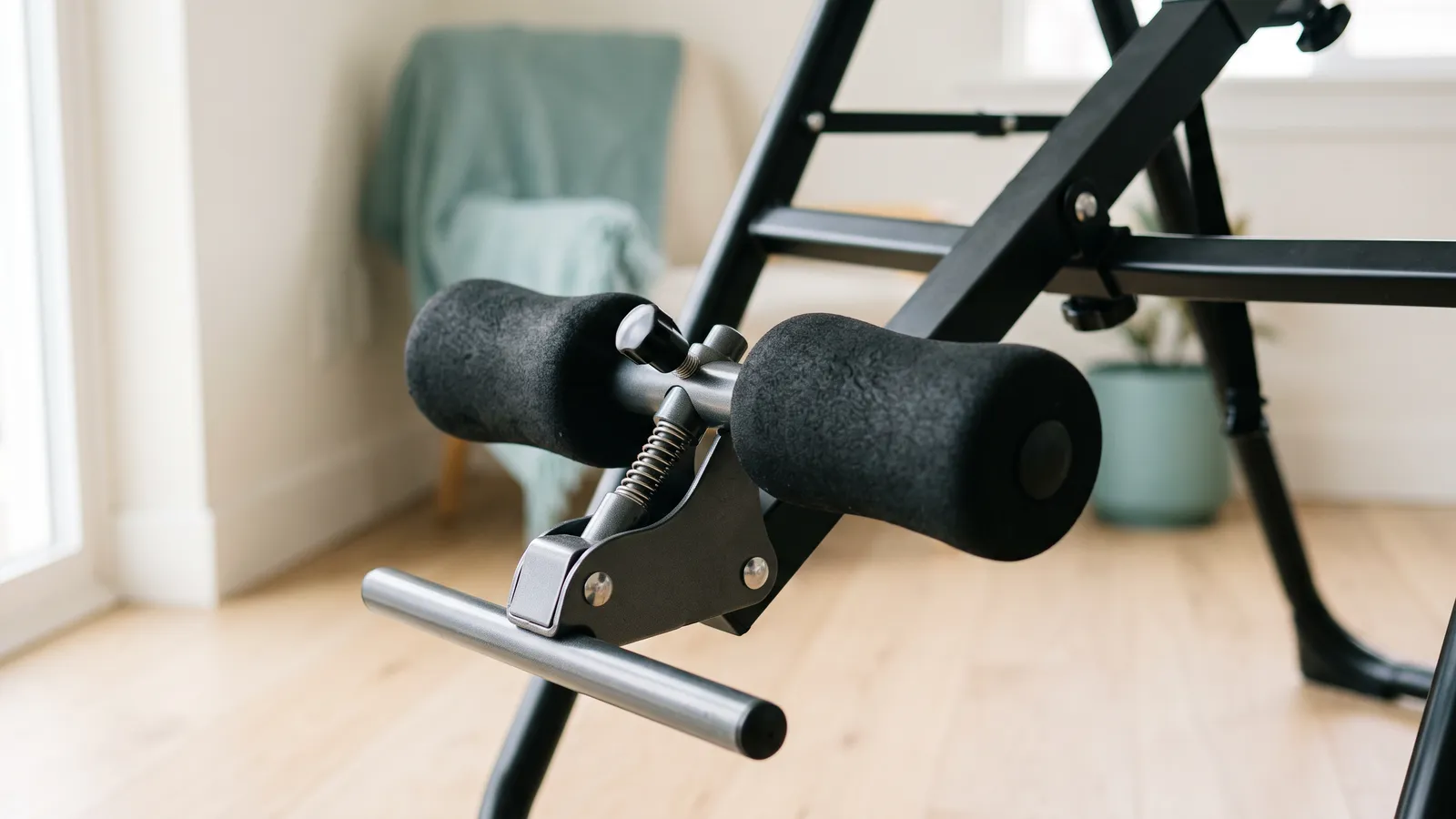
- Secure your ankles before leaning back. Teeter uses a "hear, feel, see" check: hear the locking pin click, feel that it is fully engaged, and see that there is no gap.
- Test your balance setting. Teeter says to rest your head on the bed and slowly bring your arms to your chest, and adjust the height setting if the table does not balance as described.
- For the first few sessions, have a spotter. Teeter's manuals say so until you find your balance setting.
Inverting
- Attach the angle tether or limiter, if your table has one.
- Raise your arms slowly. Teeter says the faster you move, the faster the table rotates.
- Keep movements smooth. Teeter's manuals say not to use weights, elastic bands or other equipment, and not to make aggressive movements, because it can tip the table.
- Keep the first sessions short and the angle small. See how long and what angle.
Coming back up
- Bring your arms back to your sides. Teeter says not to lift your head or sit up to return upright. Bend your knees and shift your weight toward the foot end instead.
- Cleveland Clinic says coming up quickly can leave you dizzy, so come up slowly.
- If you feel pain or become light-headed or dizzy at any point, Teeter says to return upright right away.
Other rules from the manuals
- Do not use the table after drugs, alcohol or medication that may cause drowsiness or disorientation (Teeter).
- Keep children and pets away. Teeter says not to allow children to use the machine, and not to store it upright with children present.
- Teeter says its tables are for indoor home use only.
- WebMD says injuries are often due to operator error, and suggests having someone watch you.
Common questions
Can I use it alone?
Teeter says new users need a spotter. After that, the manual is your guide.
Do I need special shoes?
Teeter says to wear laced, flat-soled shoes. Other makers may differ.
Gear that helps
Look for a clear ankle lock, an angle limiter and honest weight and height limits. See best inversion tables.
Sources
Related
- Who should not use an inversion tableWho should talk to a doctor before trying an inversion table, when to stop, and how to start carefully. Written from health sources and the makers' own manuals.
- What angle should I invert at?What the makers and health sources say about starting angles, working up gradually, and why angle scales differ between tables.
- How long to use an inversion tableSession lengths and frequency suggested by Teeter's manual, WebMD and Cleveland Clinic, and why you should start with seconds, not minutes.
- Best inversion tablesSeven inversion tables chosen from the makers' published specs: who each suits, weight and height limits, warranties, and who should not invert.