Is hanging upside down bad for you?
Last updated 2026-11-01 · Written by Inversion Guide editorial team
Disclosure: if you buy through our links, we may earn a commission at no extra cost to you. As an Amazon Associate I earn from qualifying purchases.
For information only. This page is general product information, not medical advice. Talk to your doctor or physiotherapist before using an inversion table.
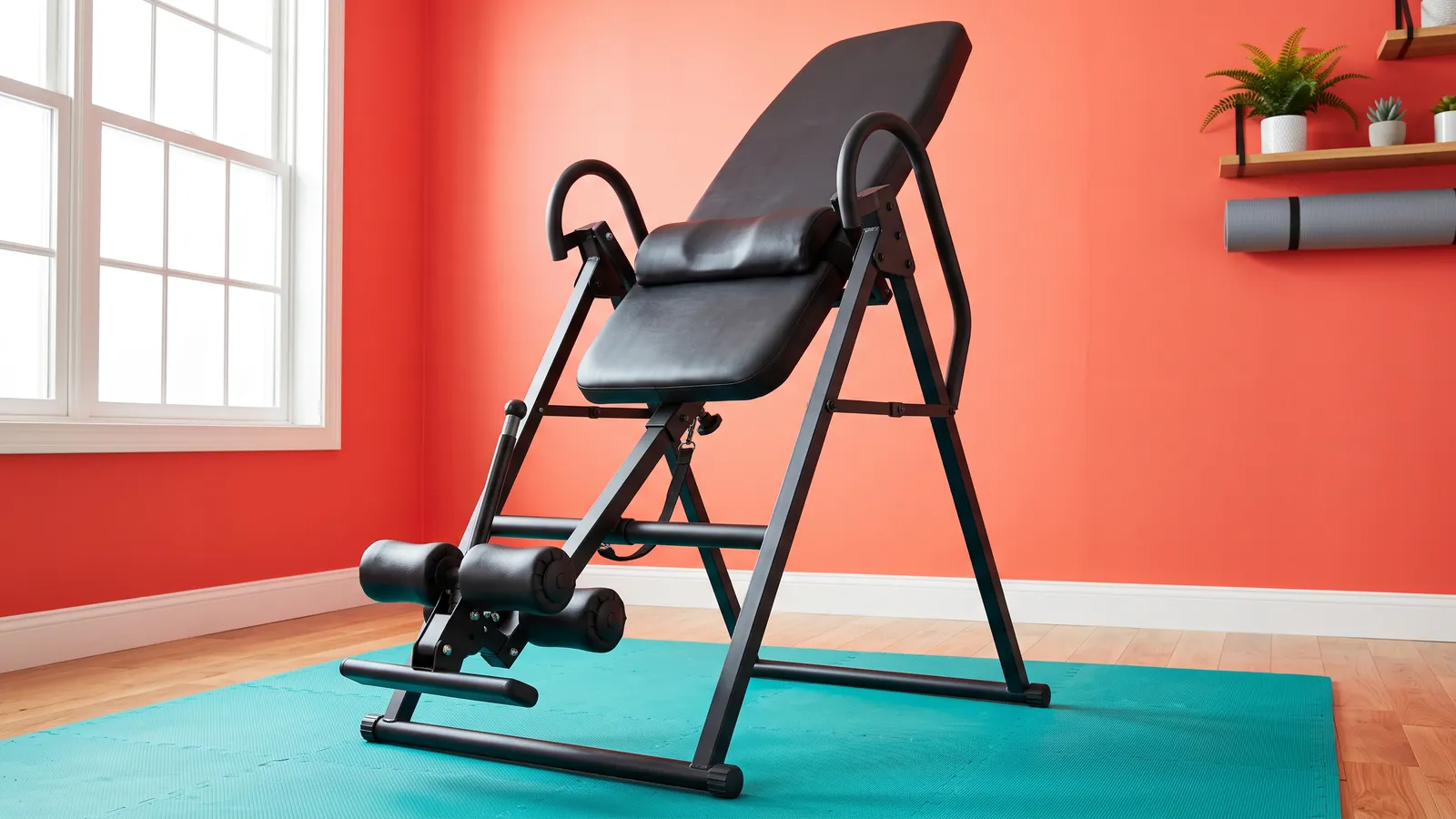
Inversion tables are not for everyone. Read who should not use one first.
We research; we have not tested any table. The facts below come from the three health sources listed at the bottom.
What happens to your body upside down
- Heart and blood pressure. Healthline says the position "increases blood pressure and decreases your heart rate." Medical News Today says the same: hanging upside down decreases heart rate while increasing blood pressure.
- Eyes and ears. Healthline says it "puts significant pressure on your eyeballs." Medical News Today adds the inner ear.
- Head. Cleveland Clinic says inversion can increase pressure in the skull because blood is sent toward the brain, and that this spike "could even be fatal." This is the reason it asks people with certain conditions to see a provider first.
- Dizziness. Cleveland Clinic notes that getting up quickly can cause dizziness or more pain.
- Back and joints. The 2017 American College of Physicians guidance, reported by Medical News Today, says traction methods "do not appear harmful in otherwise healthy people."
Who is most at risk
The sources agree on a broad list. Cleveland Clinic names high or low blood pressure, heart disease, glaucoma and other eye disease, acid reflux, pregnancy, stroke and brain injury. Healthline and Medical News Today add osteoporosis, fractures, a hernia, ear infections, retinal detachment, obesity, and blood thinner or blood pressure medicines.
If any of those apply, or you do not know your blood pressure, do not try it without a doctor's go-ahead. Our safety page has the full list with sources.
How people keep it gentle
If your doctor has cleared you:
- Do not go fully upside down. Partial angles are common, and a steeper angle means more head-down effects. See what angle to invert at.
- Start short. Cleveland Clinic suggests 30 to 45 seconds tilted back, and Healthline suggests building from one-minute sets to three. More in how long to use one.
- Have a spotter and come up slowly. Cleveland Clinic recommends both.
- Stop if anything feels wrong. Dizziness, a pounding head, eye pressure or more pain are reasons to come upright and stop.
- Learn the table first. How to use an inversion table safely covers setup and the first session.
Is a dead hang safer?
A dead hang keeps your head above your heart, so the head-down effects do not apply, but it loads your grip and shoulders. See inversion table vs dead hang.
What we'd buy if you are cleared
A safer session starts with a table you can control: easy angle adjustment, a secure ankle lock and a stable frame. Two options from our research:
- Teeter FitSpine X3 / inversion table: a premium choice with adjustable angle controls.
- Innova ITX9600: a folding, lower-cost way to start at shallow angles.
The cards below show verified specs. We show no prices because they change daily on Amazon. For more, see best inversion tables.
Common questions
Is it bad for your brain to hang upside down? Cleveland Clinic says inversion can raise pressure in the skull, which is a serious concern for some people, particularly those with a stroke or brain injury history. That is why a doctor's check matters.
Is hanging upside down bad for your eyes? Healthline says it puts significant pressure on the eyeballs. People with glaucoma or retinal detachment are among those advised to avoid it.
Is it bad for your heart? It lowers heart rate and raises blood pressure, so people with heart disease or high blood pressure are advised to avoid it unless their doctor says otherwise.
Is it bad for your back? Medical News Today reports the ACP guidance that traction does not appear harmful in otherwise healthy people. People with osteoporosis, fractures or spinal injuries are advised against it.
How long is too long? No source we read gives a universal limit. Start with seconds, build slowly, and follow your doctor's advice.
Gear that helps
Teeter FitSpine X3 Inversion Table
Best for: Most people who want a proven, easy-to-use table within 300 lb and 4'8" to 6'6"
- Max user 300 lb
- Height 4'8"–6'6"
- Max angle 180°
- Folds
- Mid-range
Prices change often. Check the current price on Amazon.
Innova ITX9600 Heavy Duty Deluxe Inversion Table
Best for: Budget-minded users within 300 lb who are happy with a simple pin-set angle
- Max user 300 lb
- Height 4'10"–6'6"
- Max angle TBD
- Folds
- Budget
Prices change often. Check the current price on Amazon.
Sources
Related
- How to use an inversion table safelySetup and first-session steps drawn from Teeter's owner's manuals and health sources: footwear, ankle lock, balance test, spotter, and how to come back up.
- What angle should I invert at?What the makers and health sources say about starting angles, working up gradually, and why angle scales differ between tables.
- How long to use an inversion tableSession lengths and frequency suggested by Teeter's manual, WebMD and Cleveland Clinic, and why you should start with seconds, not minutes.
- Inversion table vs dead hangHow hanging from a pull-up bar differs from inverting on a table: what each loads, the grip limit, cost and space, and the cautions that apply only to head-down angles.
- Inversion table benefits: what the evidence saysWhat people say inversion tables do, what health sources say the research shows, and who should ask a doctor first.
- Who should not use an inversion tableWho should talk to a doctor before trying an inversion table, when to stop, and how to start carefully. Written from health sources and the makers' own manuals.